Certificate in Co-Creative Transactional Analysis (Practice)
About the Course
We are pleased to offer a six day certificated programme in Co-Creative TA (CCTA) which will be delivered by TSTAs with many years of experience developing and practicing CCTA in the educational, organisational and psychotherapy fields. The programme is, therefore, applicable to all levels and fields of TA practice.
Location
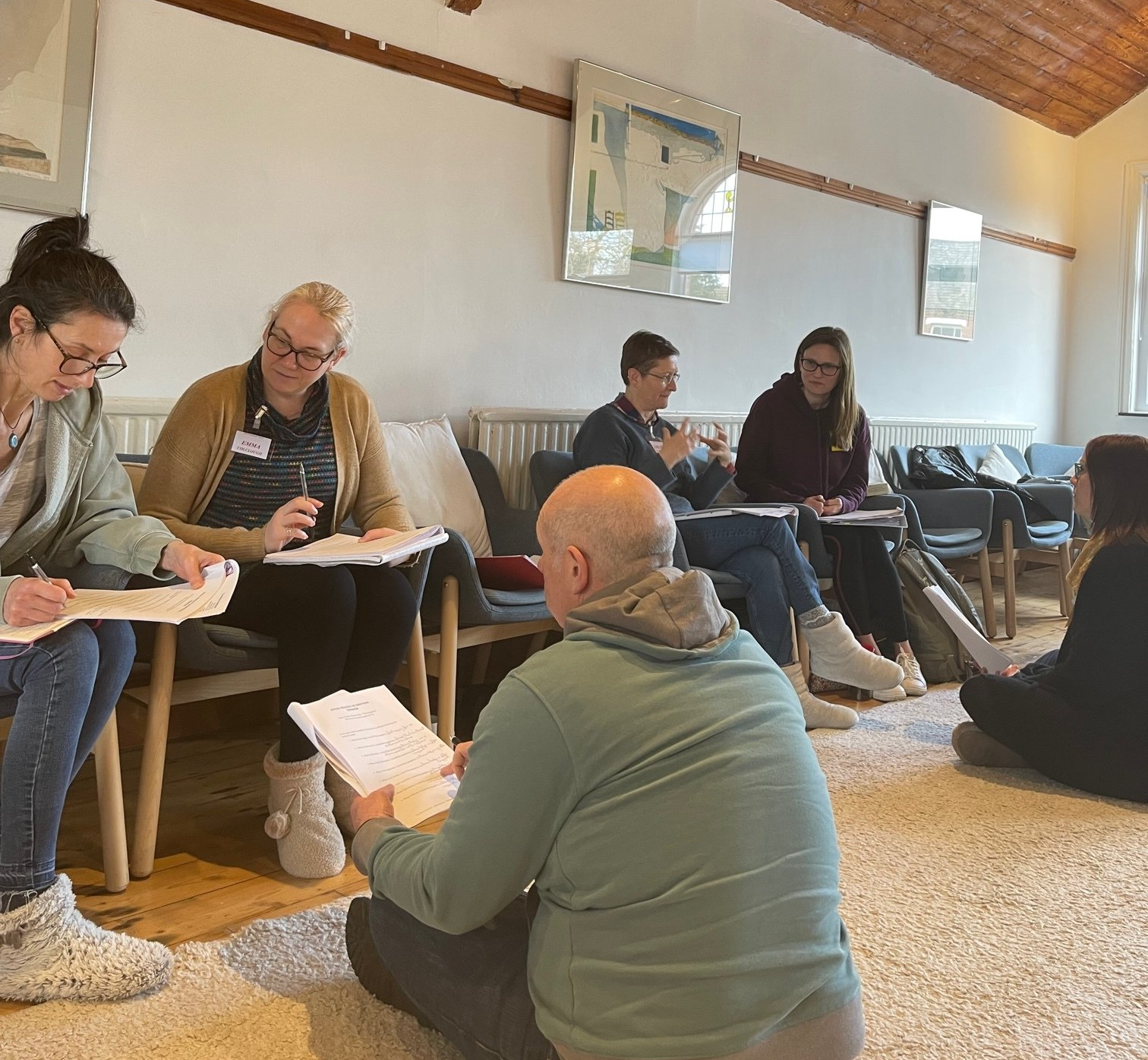
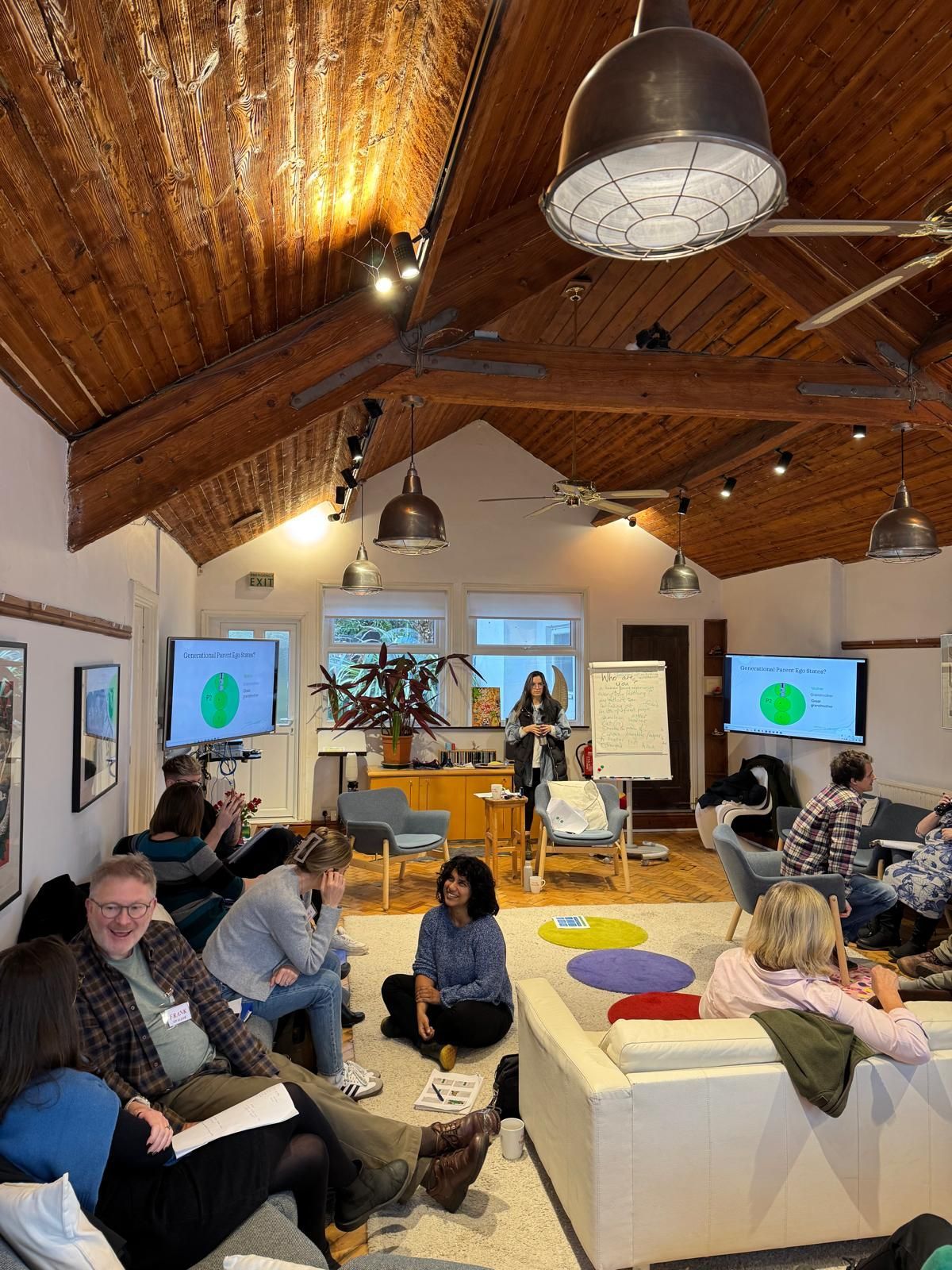
Depending on the location of registered attendees of this cohort, the programme will be delivered either online, or in a hybrid format (in person at the Berne Institute and online). Please note that the October weekend with Keith Tudor will be held entirely online and will be an earlier start to account for the time difference in New Zealand. Please indicate when booking your place whether you would like to attend at Berne House if there are weekends where hybrid attendance is possible.
Timings 9:30am to 5pm UK time with breaks, please note there may be some adjustments to timings to accommodate international time zones.
Please note sessions will be recorded for use by participants to review or catch up with the material.
Programme Overview
Weekend 1 – 12/13 September 2026 (with Paul Robinson and Deborah Robinson)
Introduction to CCTA
· Field theory and constructivism
· The four principals of CCTA: “we”- ness, shared responsibility, present centred development and positive (mutual) regard.
· Contracting from within a CCTA frame of reference
· Integrating Adult
· Co-creative script
Weekend 2 – 10/11 October online only (with Paul Robinson and Keith Tudor)
Reframing TA through the healthy perspective of CCTA
· Co-transferential relating
· Co-creative personality
· Co-creative identity
· Co-creative confirmations
Weekend 3 – 14/15 November (with Paul Robinson and James Sweeney)
CCTA in Practice
· Contracting
· Being non-defensive
· Empathy or empathic?
· Present centred relating: accessing our integrating Adult
· Supporting transformational learning and change
· Inviting the generation of a co-creative (TA) “bubble”
Optional Extension (Assessment) Weekend 4 – 16/17 January 2027 (with Paul Robinson and James Sweeney / Debbie Robinson as needed)
Developing CCTA Practice
· (Re)contracting for the weekend
· Exploring CCTA based supervision
· Presentations of CCTA in practice with feedback from participants and facilitators, and identification of good (CCTA) practice
· Reflection on, and celebration of, the development and learning
· Identification of aspects of (CCTA) practice to develop further
Summary
Course Cost
Fees 2026/27
£900
£825 Berne Members
for 6 day training and Certificate of Attendance
OR
£1200
£1100 Berne Members
for 8 days training and Certificate in Co-Creative TA Practice
Course Dates
Dates 2026/27
12 - 13 Septemeber 2026
10 - 11 October 2026
14 - 15 November 2026
16 - 17 January 2027 optional
(for Certificate Award)
Online or Hybrid (mix of online/Berne House)
Tutors
Keith Tudor TSTA(P)
Paul Robinson TSTA(E)
Debbie Robinson TSTA(O)
James Sweeney TSTA(P)
Our Core Philosophy
At The Berne Institute we recognise that people come into TA training with widely differing experiences of clinical practice, theoretical knowledge and formal academic learning, and that they differ widely also in their current personal resources and skills. Our courses therefore honour the uniqueness of each individual’s learning and experience and their different learning styles, pace and areas of competence.
The philosophy and practice of Homonomy that respects our mutuality and interconnectedness has been recently integrated into the Berne Institute philosophy. The aim is to expand the focus in our theory and practice from individual change to include a focus on the wider implications of our work on the whole community and our planet.